What roles should citizens play in EU policy-making, and how could that work in practice?
A seminar of the Jean Monnet Chair Challenges to Democracy and Representation in the EU (EuDARe), coordinated by Prof. Marcello Carammia, in the aula magna of Palazzo Pedagaggi.
Prof. Sebastiaan Princen, of Utrecht University, a scholar of governance and policy-making in the EU, discussed the roles citizens should play in the European Union’s decision-making processes, and how their participation could work in practice.
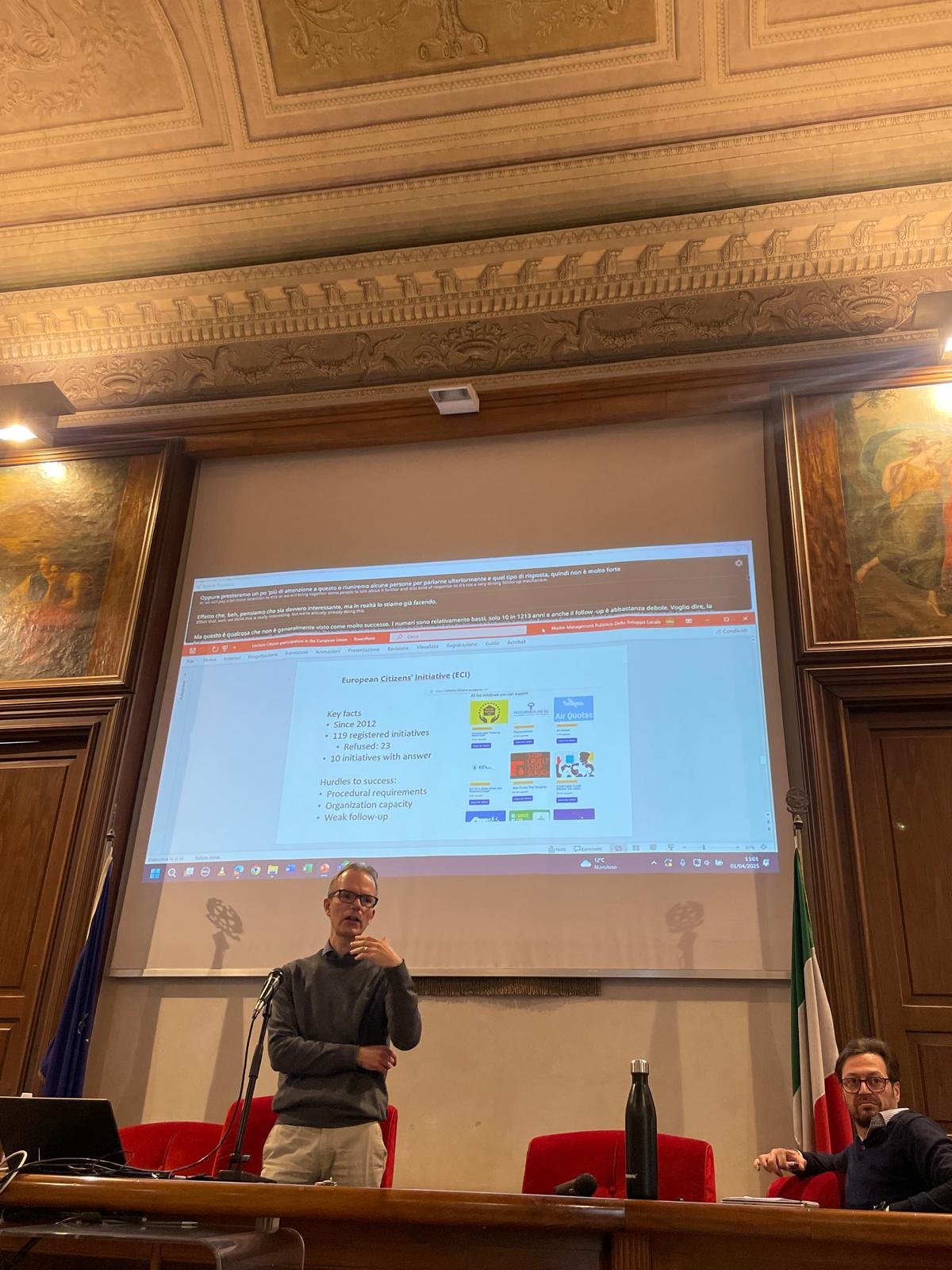
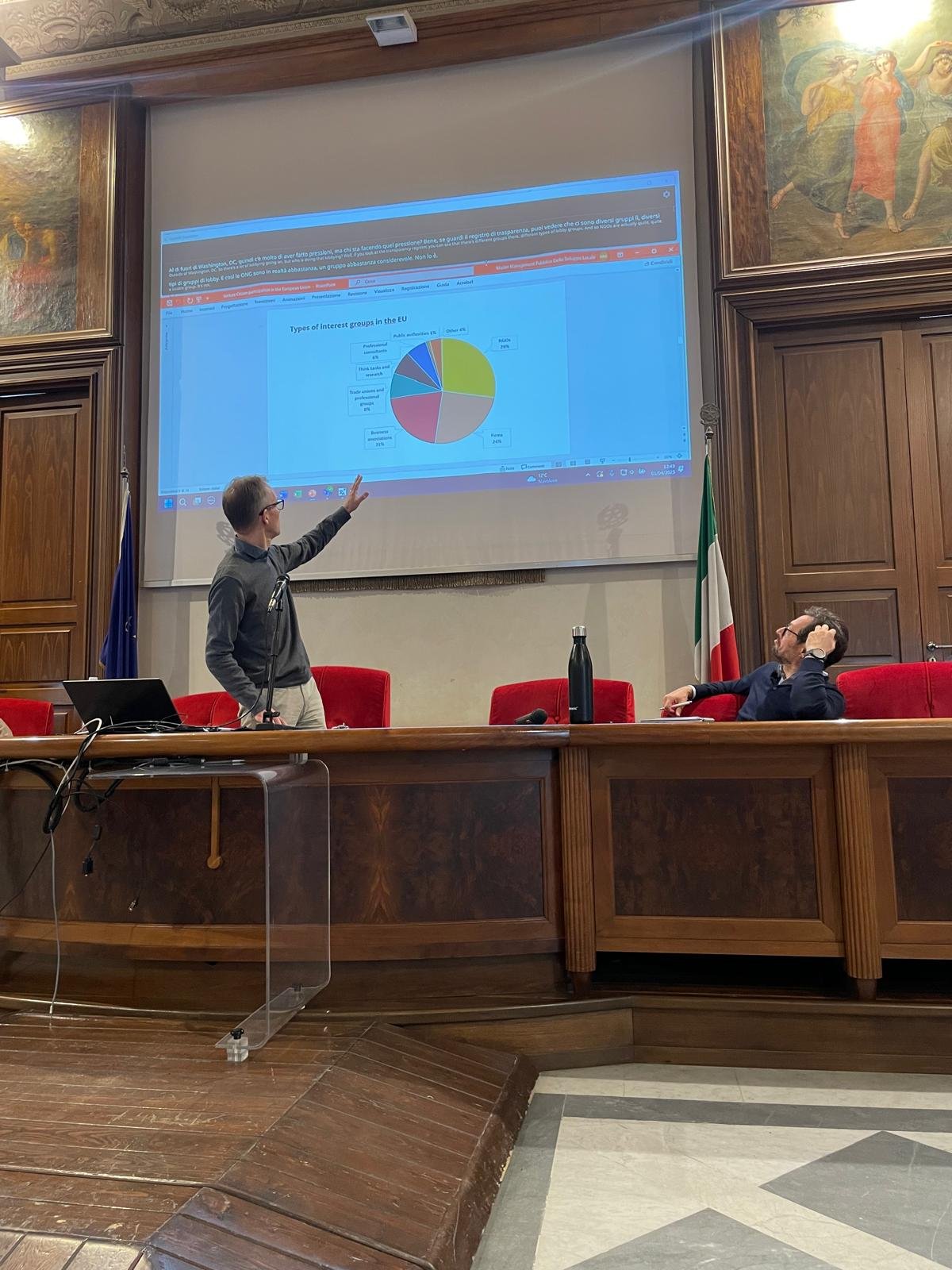
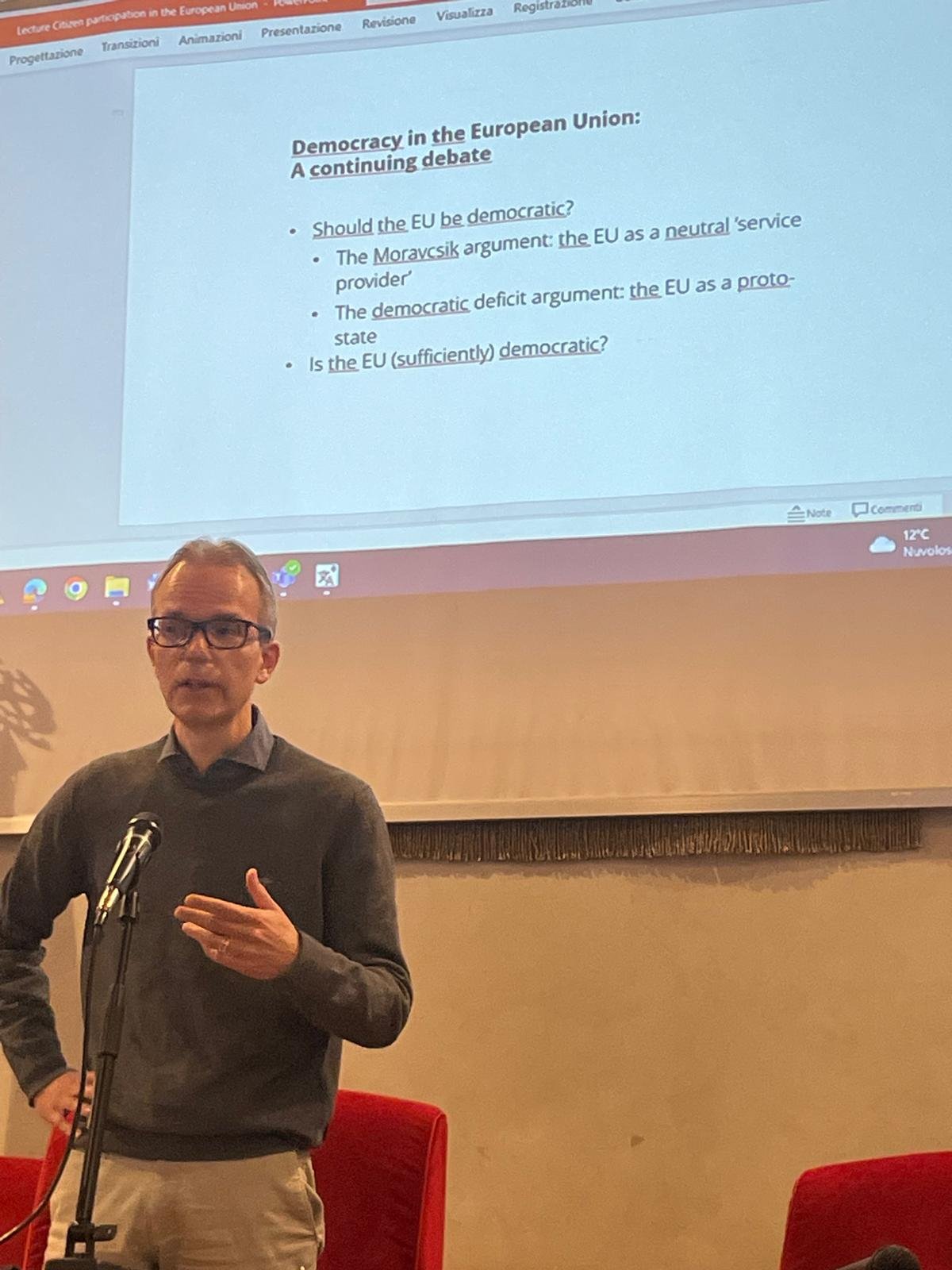
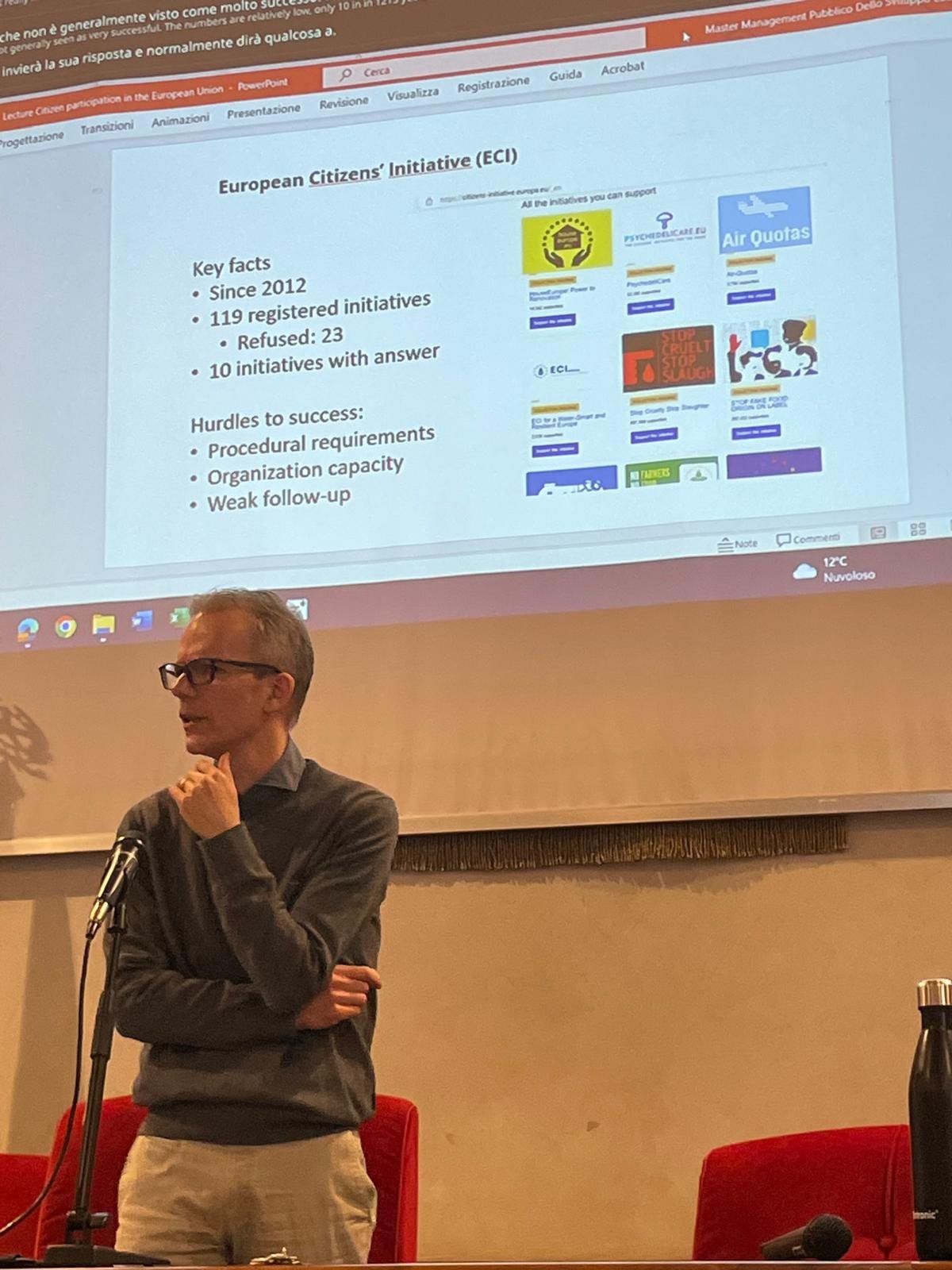
The seminar opened with the question of whether the EU should be democratic at all, given the long debate on whether it is a “proto-state” or, in Moravcsik’s phrase, a neutral service provider. Since its decisions reach deep into citizens’ lives, the question becomes how democratic it is today. Electoral accountability runs mainly through the European Parliament elections, which low turnout keeps “second-order”. Outside elections, citizens take part through protest, which mostly targets national governments even when the policy is European, and through lobbying. Institutional channels (online consultations, the European Citizens’ Initiative, citizens’ assemblies and panels) exist, but their effect on decisions is debated: citizens’ input weighs most when policy-makers have no dominant view of their own. The discussion closed on whether these forms of participation can narrow the democratic gap in the EU.
After the seminar the Lab’s interns interviewed Prof. Princen on technocracy in the Commission, national protest against European policies, artificial intelligence in policy-making, and European defence.
Introduced by Pinella Di Gregorio, Director of the DSPS. Moderated by Marcello Carammia, Danilo Di Mauro, and Iole Fontana (DSPS). The seminar was held in English, with Italian subtitles available.
Photos